Big trees make the richest cider
At Sweetgrass Farm, we like big trees
About Us
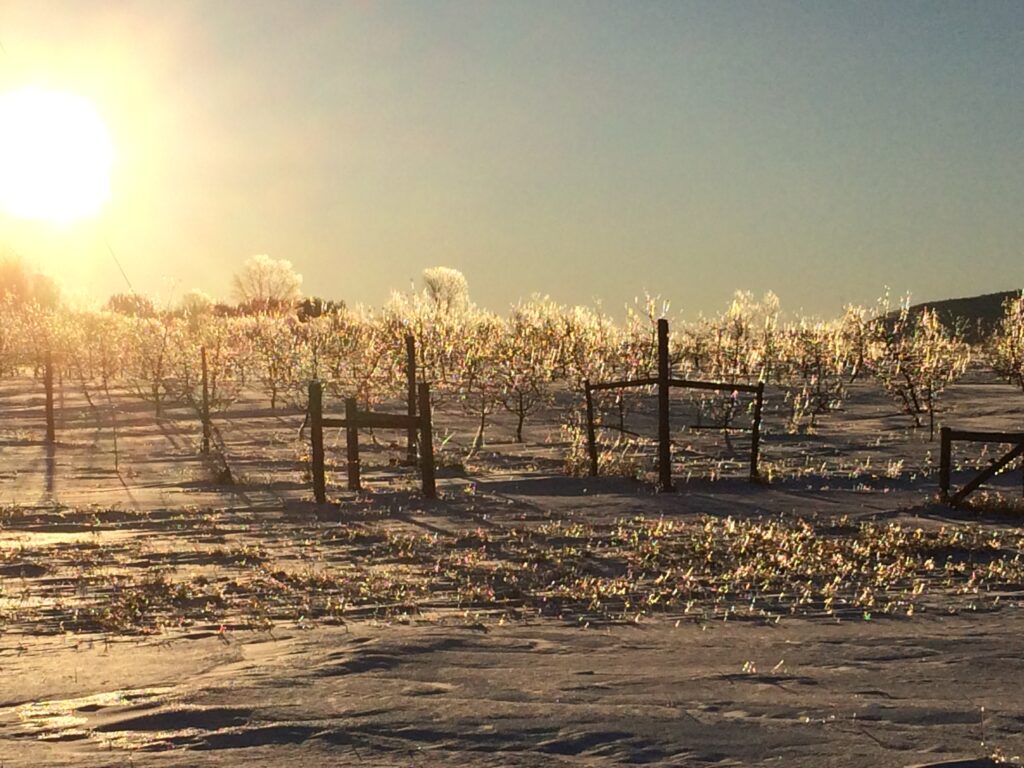
Sweetgrass Farm was established in the year 2000 and the first apple trees were planted in 2001. We, Jodi and Michael, moved here when our children were young and raised them among the trees and the various animals that have spent time on this land. We set aside the best two acres for the apple orchard and planted 250 trees in the first eight years. Since those initial plantings, some trees have grown to enormous size, some have died and been replaced, and a number have been grafted to varieties better suited to our management style. For the past twenty-five years, amidst all the busy chaos of our own and our childrens’ lives, we’ve tended the trees with annual pruning in the spring, training of young branches, summer bud grafting, mowing, fence repair, removal of borers that kill trees, and guards against winter damage. Most years we’ve had moderate apple crops. There have been a few bumper crops and a few years you could hardly pick a peck.
The orchard has always been managed organically, but we sprayed for pests with organically approved sprays for a number of years. Around 2014, we realized the sprays were not effective enough to warrant their use, and we also came to believe they might be causing more harm than good in being toxic to other insects and the things that eat them. Instead, we moved to a system of more integrated pest management without sprays. Over the past dozen years, the biodiversity of the orchard has continued to increase, until we have well over ten species of birds that nest either in or under the trees, together with an uncountable number of insects and microbes that seem to hold one another in check. The apples are hardly perfect, but they become “more perfect” over time, as if the system is moving toward balance. Where the apples are mainly cider grade, our large trees produce remarkable flavor in the fruit, allowing for a superior cider to anything commercially available in our region.